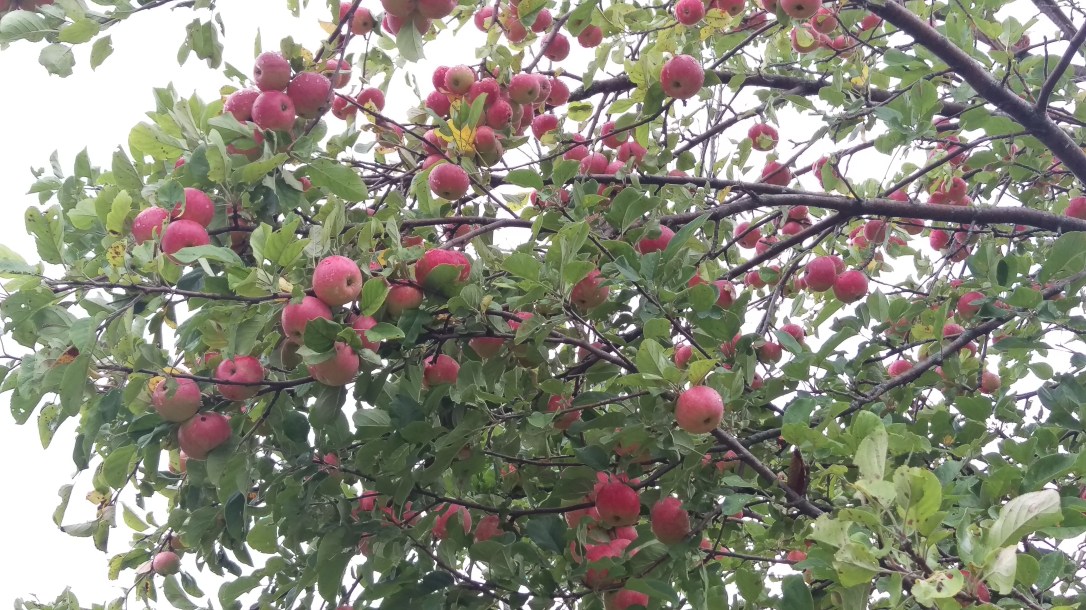
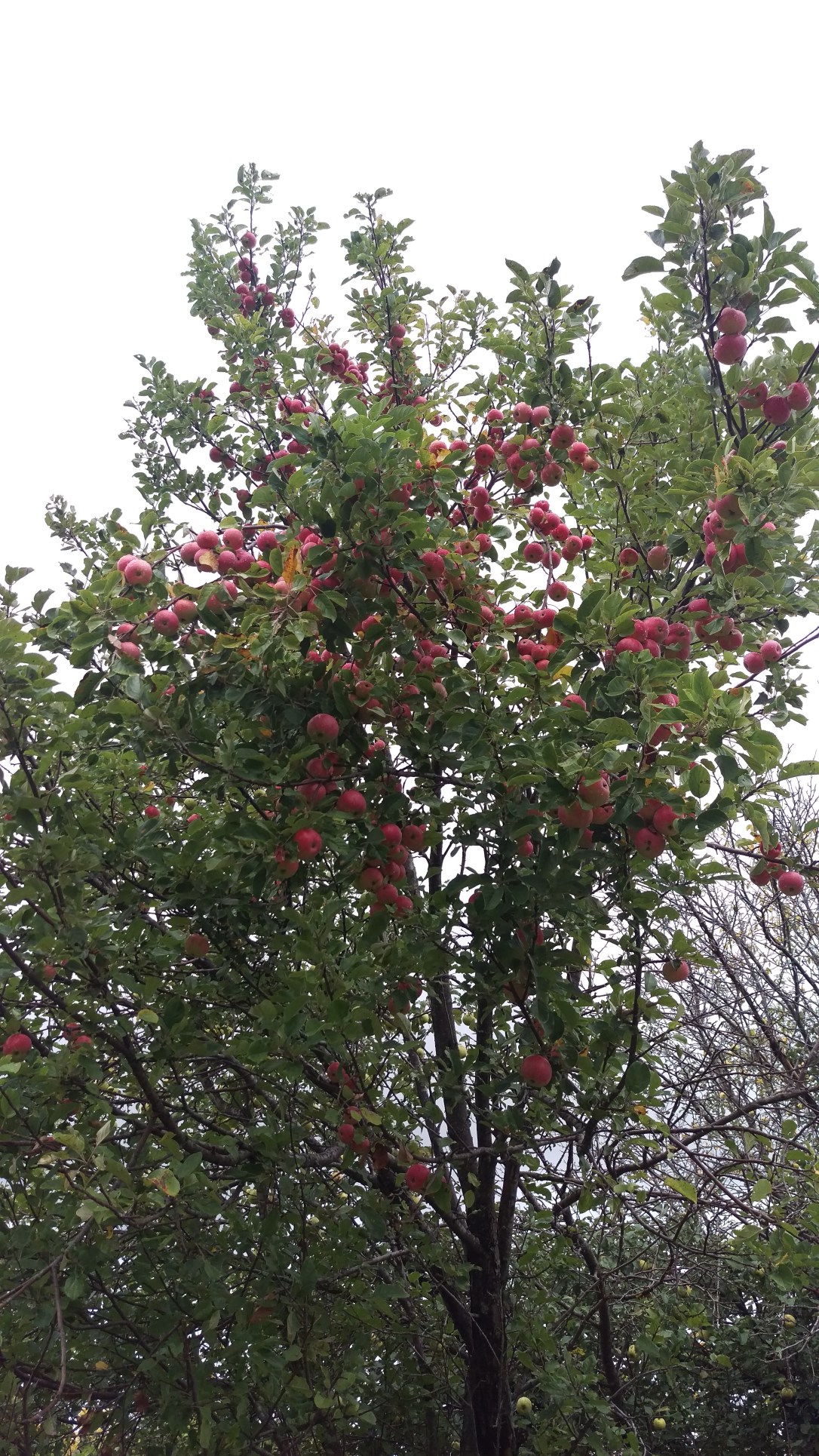
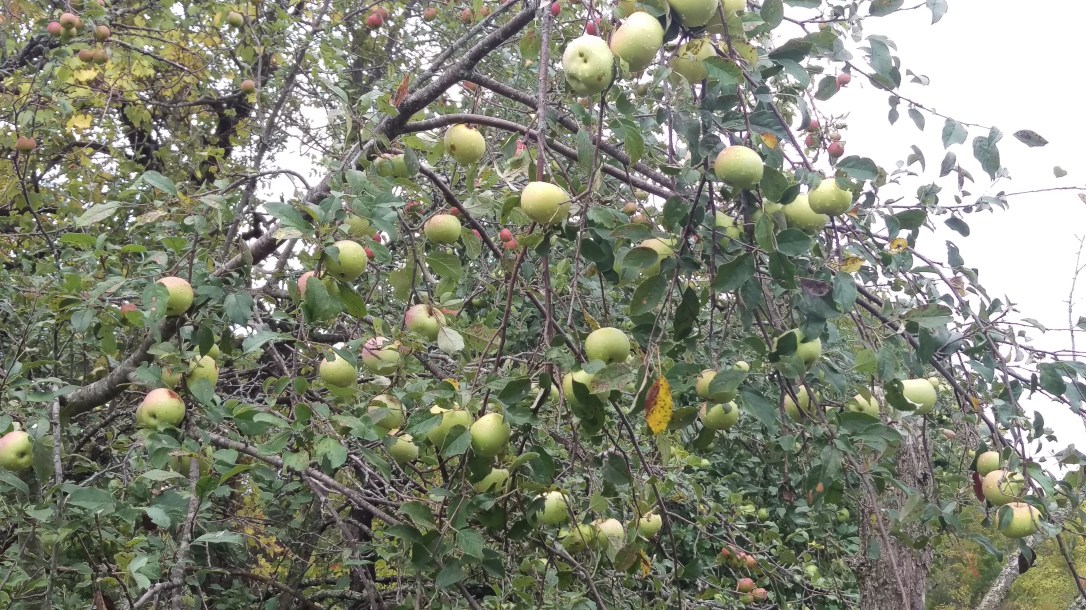
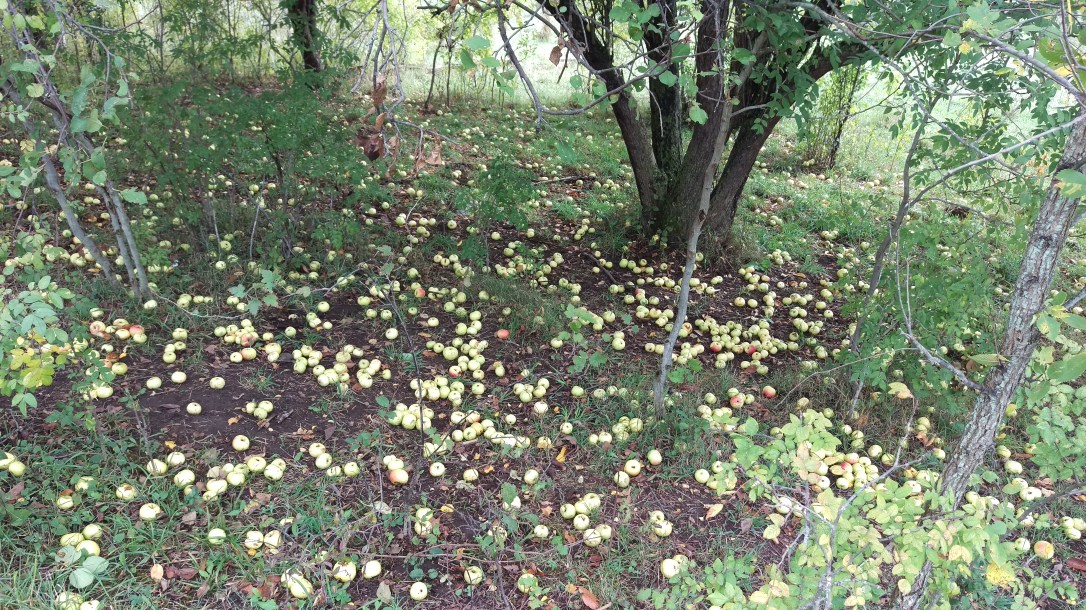
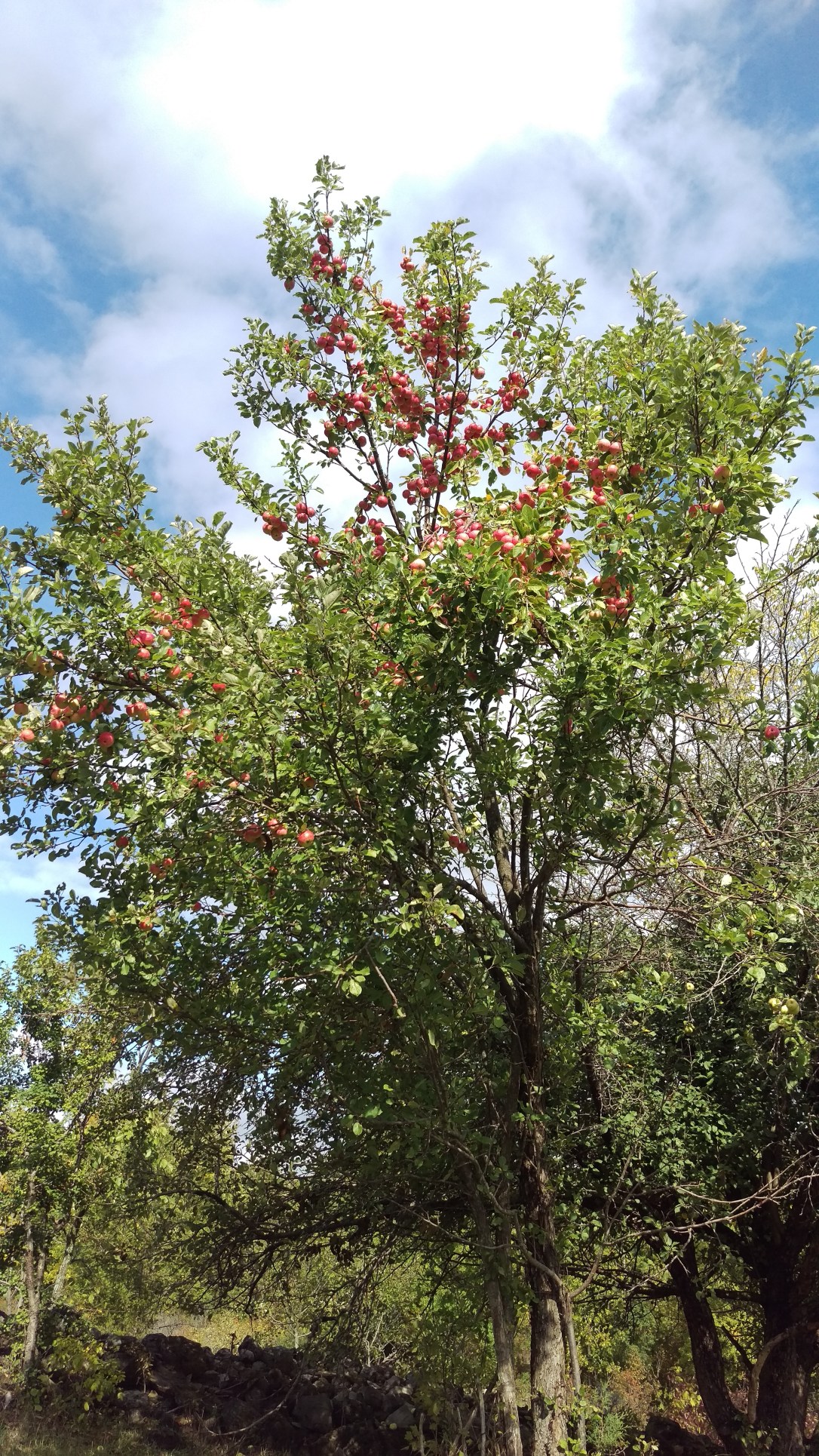
They tell you that an apple a day keeps the doctor away. If true, we won’t be seeing a doctor for many years. This year has brought a very pleasant apple surprise. In one of our grazing fields at the rear of the farm property, we recently discovered that we had a lot more apple trees than we believed. We estimate that a good fifty apple trees have grown at the edge of one of our grazing fields. The cows that traditionally graze here seem to have avoided this field this year more than before. As a result, the apple trees have had ample time to flourish and bear a bumper crop. There appears to be a rather diverse variety of apples as well, including crabapples, cider apples, both large and tiny apples, russet apples, sour and sweet apples, and other varieties that we have not been able to identify as of yet. We will be heading back to gather more apples but in the meantime, here are some images of our newfound apples.
These beautiful red apples were exceedingly sweet and tart.Another photo of the red apple trees that are growing about 20 or 30 feet high.This variety had the consistency of a Macintosh and have been great for baking.The edges of our grazing field covered with apples.The newfound apple trees seem to have had a bumper year with fewer cows grazing in the area. We hope to have a more concerted effort next year to harvest the apples more thoroughly and fence off trees that show the greatest potential in the future.
This year has been a memorable experience for new farmers like us. Our orchard was planted in April of this year with great hope of a perfect summer to give the trees a hardy head start. The driest summer on record, instead had us scrambling to make sure that our precious trees could weather drought-like conditions. Losing only fifteen percent of the trees was a blessing, but heartbreaking as well. Weeding, mulching, wrapping and sweating symbolized summer at Seven Fields Farm & Orchard. Luckily, the trees survived. Happiness flows from hard work.
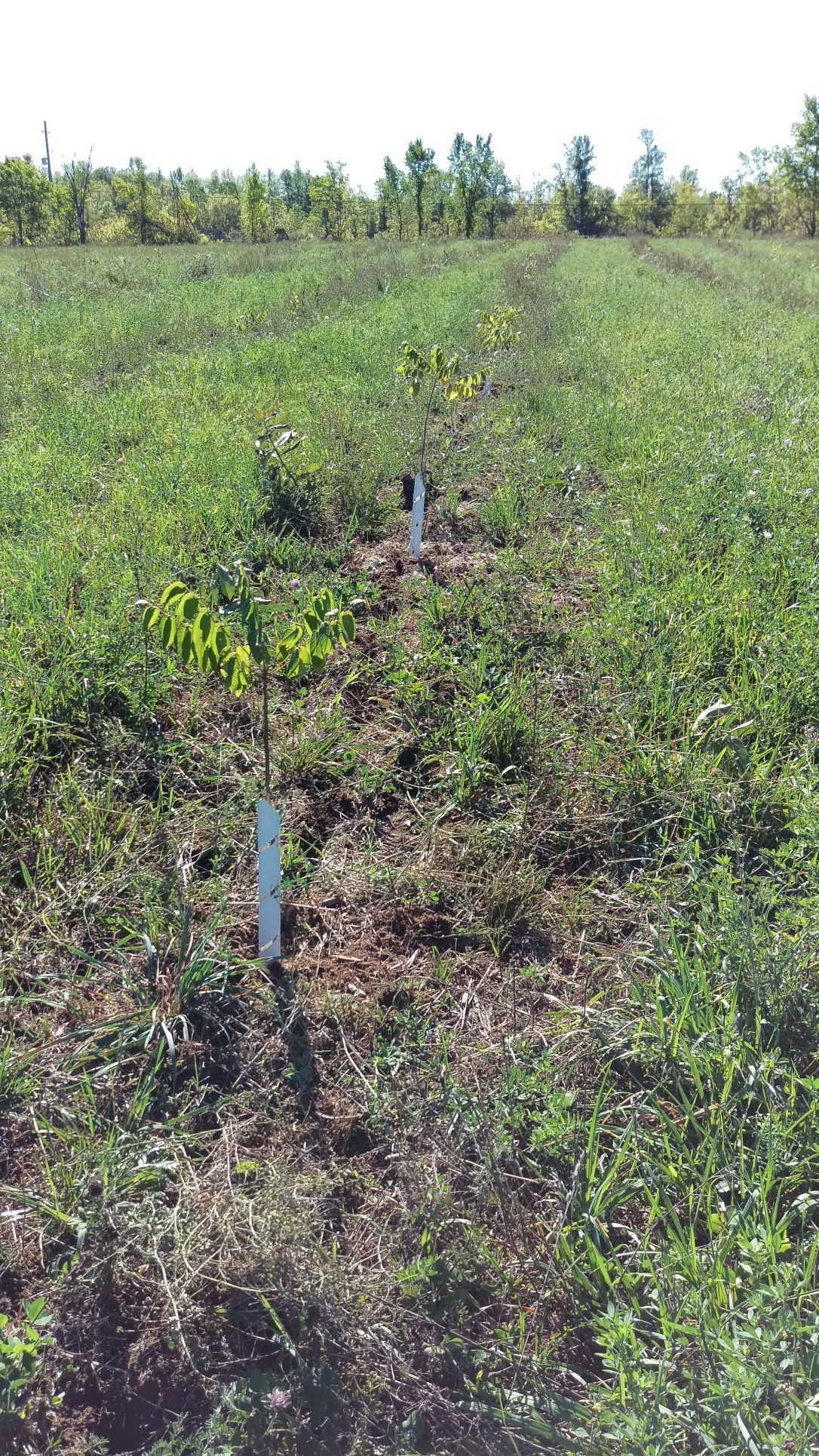
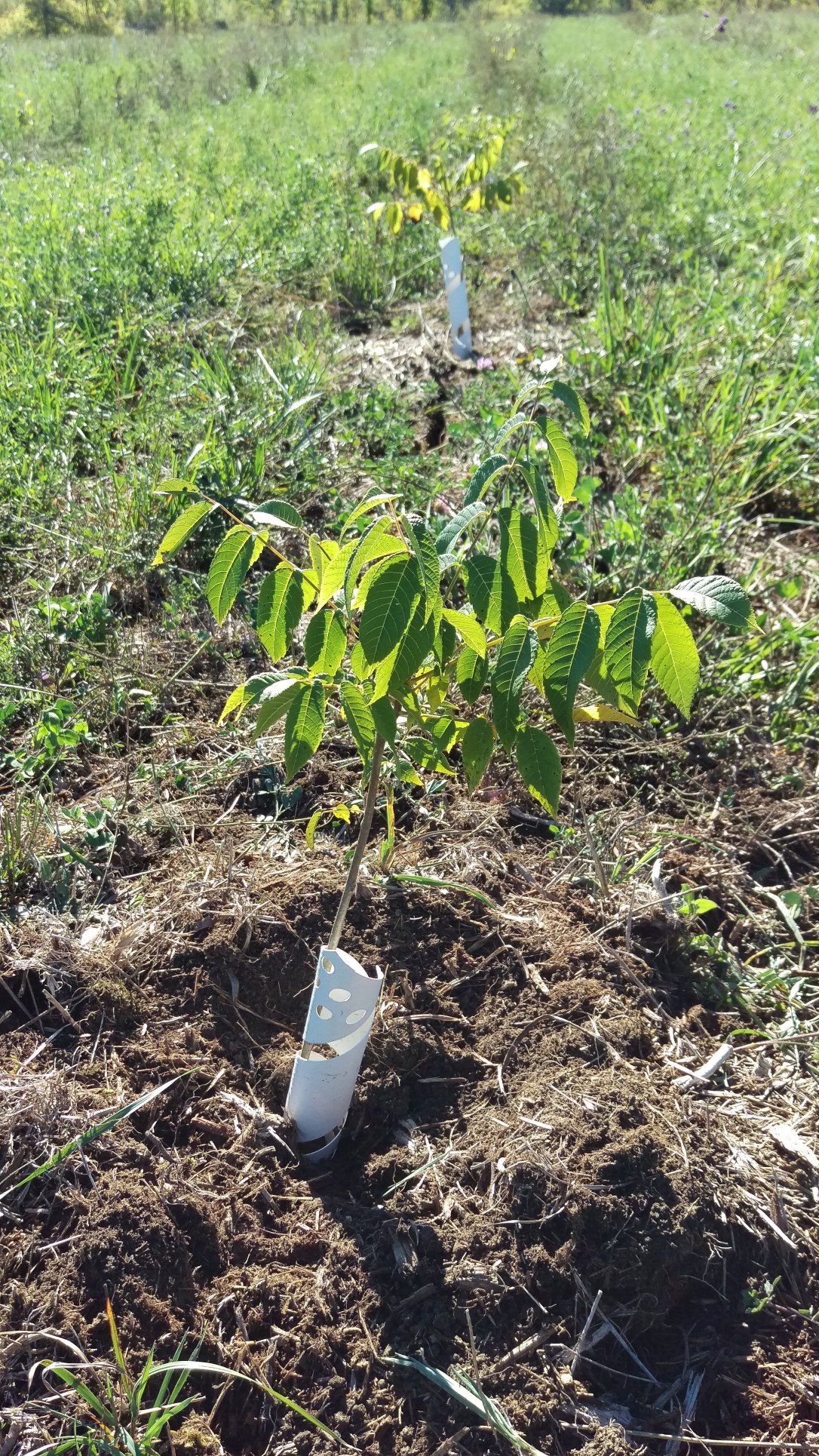
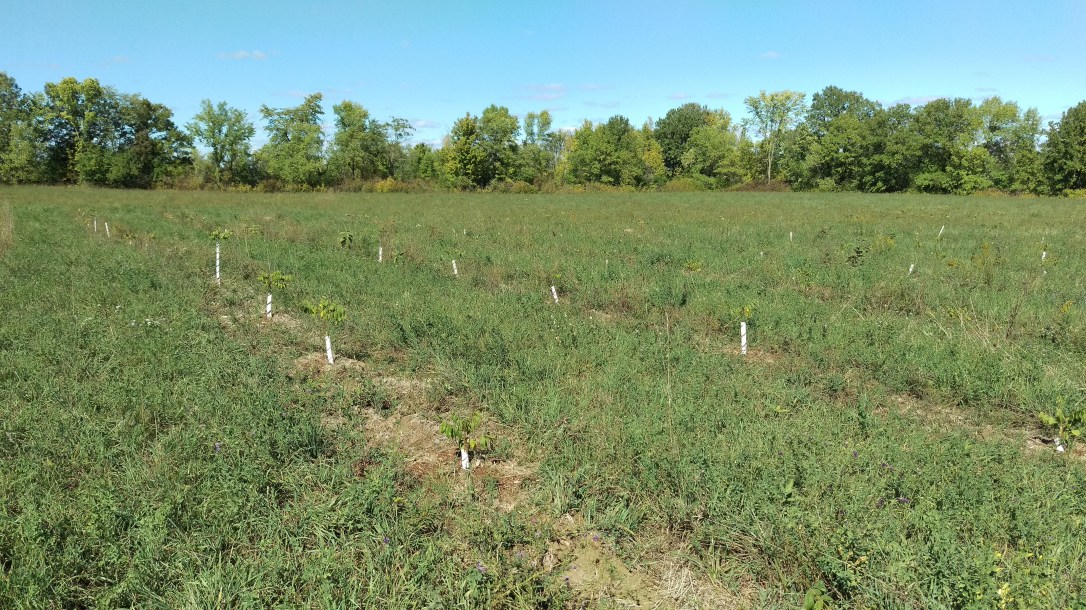
Now that fall is upon us we can reflect on all that we have learned (mistakes and all) in building our dream walnut orchard. Fall has always been a wonderful time of the year, but it also provides a stern reminder of mother nature’s next seasonal transition. We have been pushing our aching muscles to finish wrapping our trees in protective guards that will suppress pests from eating the fragile bark and give the saplings a little extra protection during what is predicted to be a harsh winter. Spring will bring its own set of challenges as the wraps will have to be removed, and eventually expanded as the trees grow. There is something so wonderful about caring for thousands of trees that will grow old as we do. Here are some images of our progress to date:
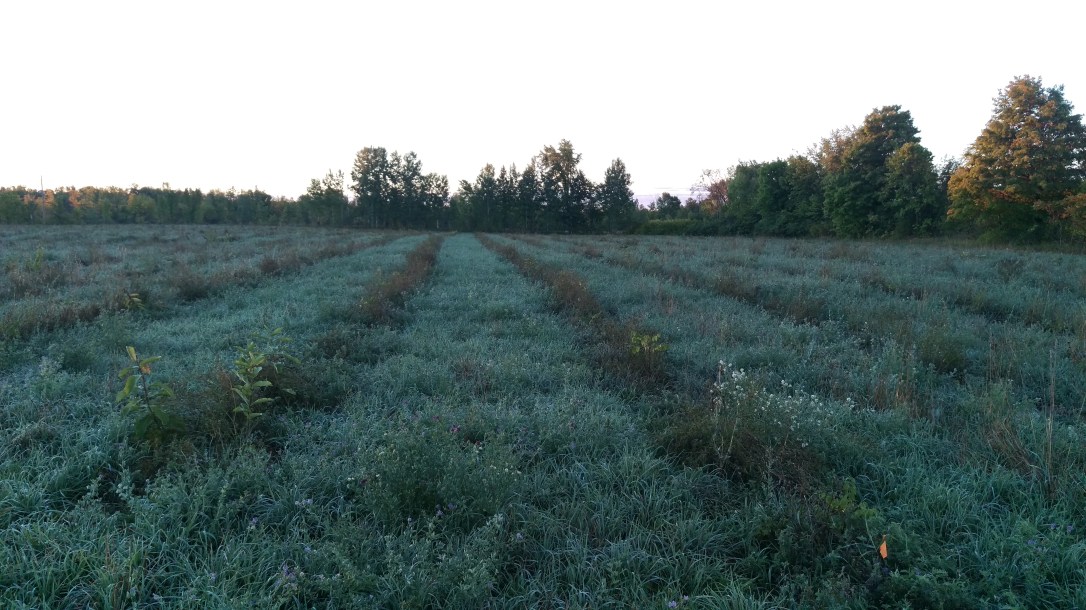
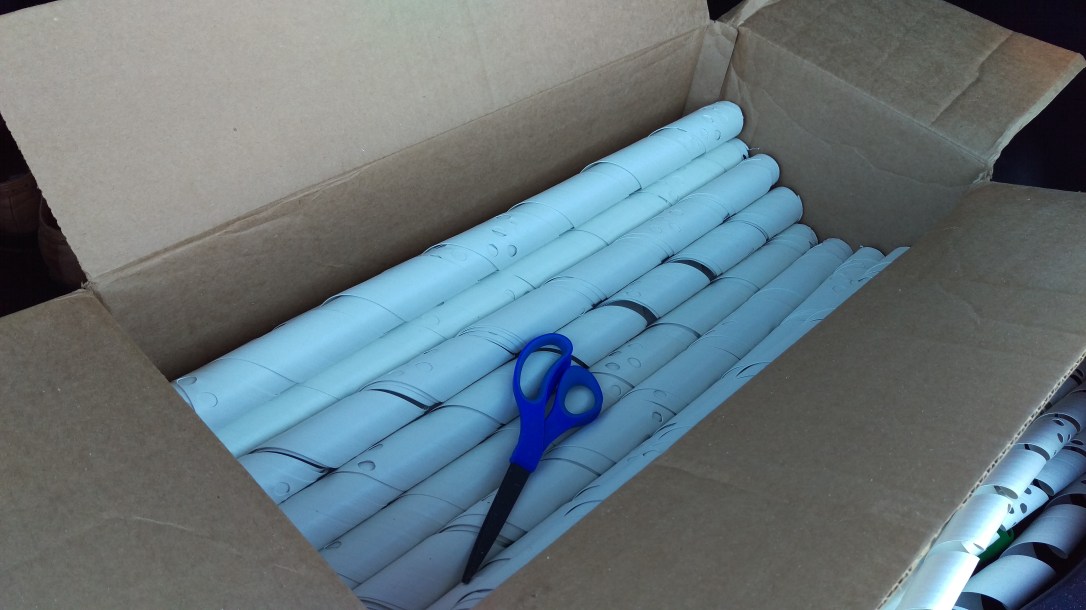
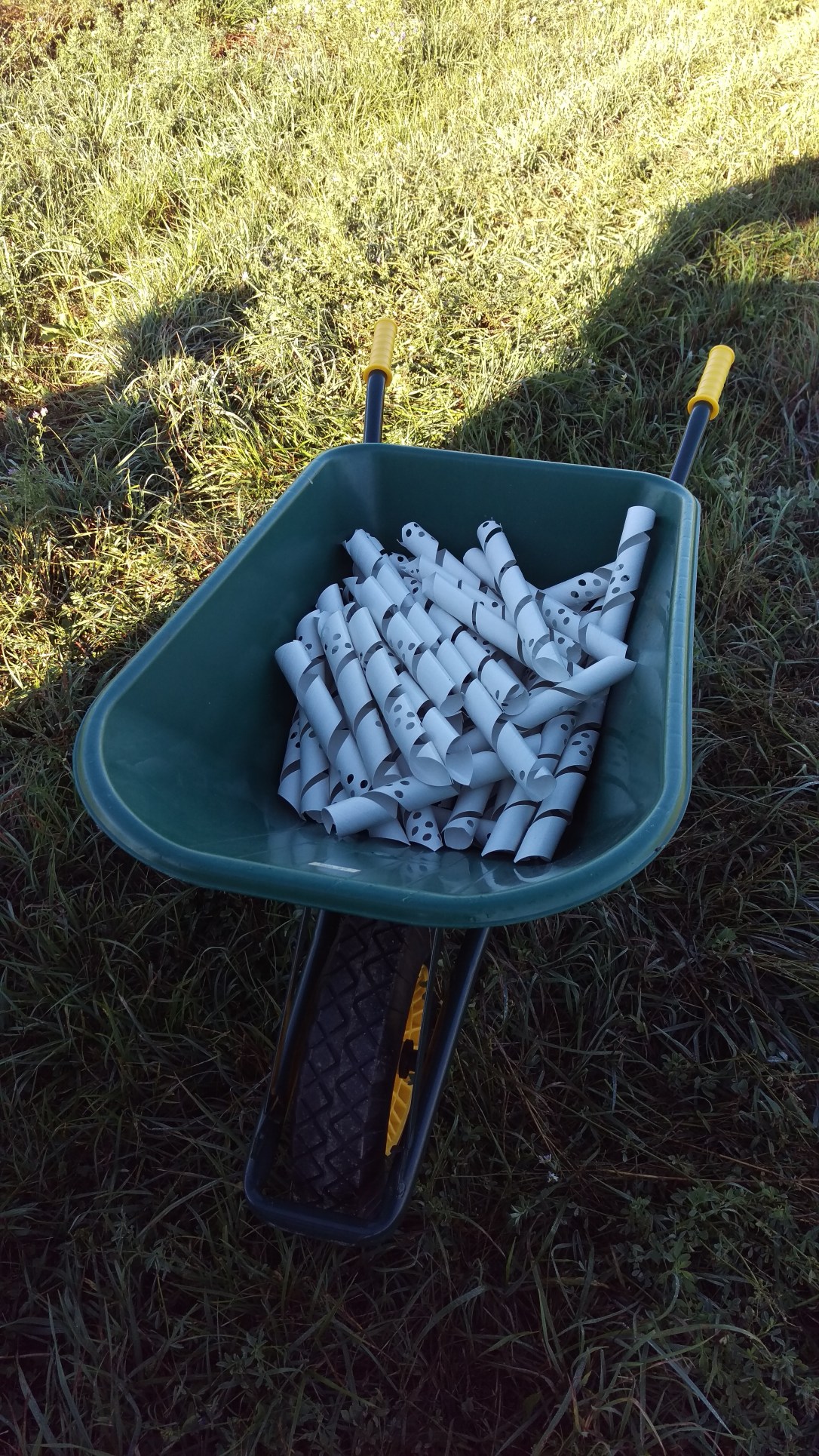
We usually start working at the orchard at 6AM. The early morning dew makes weeding much easier as the roots can be pulled out less strenuously. You can see in the image above that many of the weeds are taller than our walnut saplings. We purchased several thousand tree protectors from Pineneedle Farms in Ontario.We then separated each tree wrap and cut them to the required length for each tree.It is hard to imagine but these tree wraps are a lifeline for a new orchard. Aside from their obvious benefit in terms of deterring pests, the protectors also help the tree retain heat and assist in straightening the tree as they often grow rather off-centre once planted. The tree protectors need to be approximately 1-2 inches deep to ensure that part of the root is also protected and that the wrap is secure in the ground so as not to come loose.The wraps don’t need to cover the entire trunk of the sapling, but enough to protect it from insects, bark-eating pests, and colder temperatures. Leaving a little room also encourages tree growth.The trees are more visible once the tree wraps have been placed. Only a few more thousand to go!


 Seven Fields Farm & Orchard