
Work at the farm has really increased this year. Aside from our usual quibbling about the weather (a uniquely Canadian trait), activity at the farm is at full speed. We have had our hands full with weeding and trimming (I know you are getting tired of hearing about this), but we have also made sure to focus on protecting our walnut and apple trees from insects, blight or disease. We have been testing some natural sprays (i.e. neem oil, etc.) on the trees to see just how effective these sprays can be. We will keep you updated but after the eastern tent caterpillar infestation this year we have to be extra vigilant. It has undoubtedly been a challenge to use non-pesticide methods to control pests but these methods are an important part of our values at the farm.
Excessive moisture this summer has delayed the harvesting of hay significantly. Hay has been harvested in two of four fields but the risk of wet bales still threatens the harvest. Moisture levels in hay bales should be no more than about 25-30 percent (depending on the size of the bales) to ensure digestive quality for livestock, reduce the growth of mold (mold can grow so severe that it generates enough heat to be a fire hazard in barns through spontaneous combustion), and last for extended periods. It is hard to imagine but we have yet to see a solid week of sunshine this summer in order to complete harvesting of the hay.
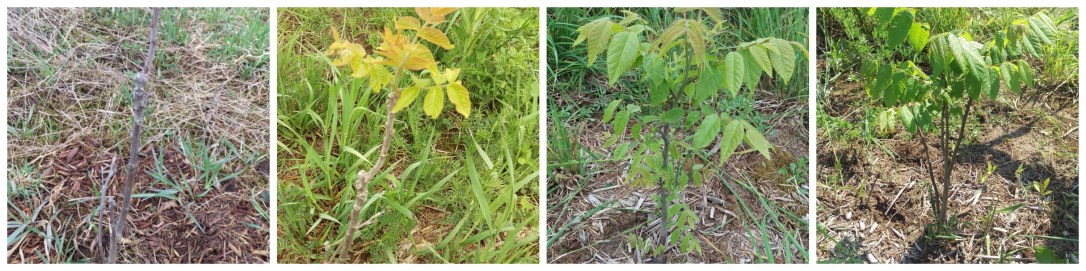
The walnut trees have witnessed a lot of growth this summer. Some of the images below show several inches of growth (some even more) as of July. There are saplings that we believed to be dead that are sprouting tiny leaves at their base, even at this late stage of the summer. We have been encouraged by this year’s growth after negligible growth last year as a result of the drought.
A New Tool
The labour-intensive and time-consuming process of weeding, trimming, and, at times, outsourcing the grass cutting, has taken a toll on our time and money. That is why we invested in a Cub Cadet XT1 Enduro Series 46 in. 22 HP V-Twin Hydrostatic Riding Mower. This powerful mower will be used exclusively to trim between our orchard rows. The mower has an almost indestructible motor, some amazing safety features (i.e. the blade stops if you stand up off the seat), 12 adjustable cutting heights, and great maneuverability to ensure we protect our still yet vulnerable trees. We negotiated a great deal with a local distributor for an extended warranty, maintenance, and storage if required. We will let you know how the Cub Cadet performs in the months to come. We are very excited to have a powerful helping hand at the farm.
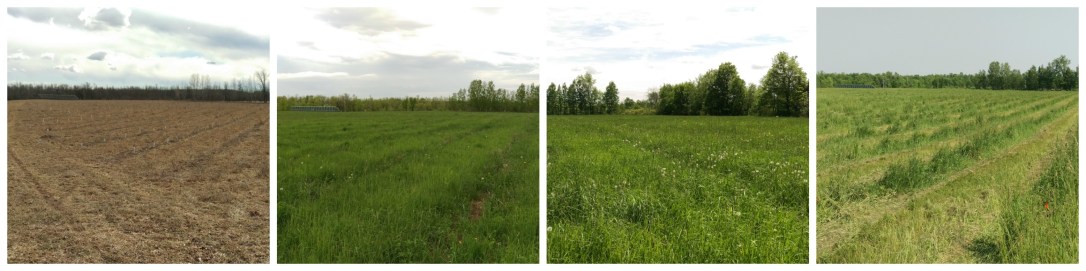
Here are a few images from the farm for July:


 Seven Fields Farm & Orchard